Biography
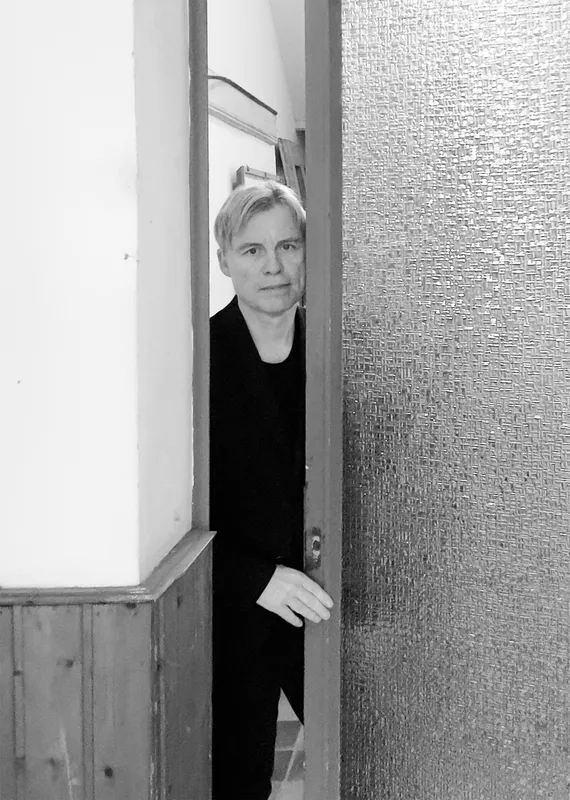
© Gregor Schneider / VG Bild-Kunst Bonn
Gregor Schneider was born in Rheydt (today Mönchengladbach-Rheydt) in 1969, where he lives and works. He was a visiting professor at several art academies between 1999 and 2003, including De Ateliers, Amsterdam; the University of Fine Arts Hamburg; and the Royal Danish Academy of Fine Arts, Copenhagen, and was later appointed Professor of Sculpture at the University of the Arts Berlin (2009), the Academy of Fine Arts Munich (2013), and the Kunstakademie Düsseldorf (since 2016). In 2015, he was elected to the North Rhine-Westphalian Academy of Sciences, Humanities, and Arts, and in 2018 he was admitted as a new member to the Visual Arts Section of the Berlin Academy of Arts.
The central medium of Gregor Schneider’s artistic practice is the construction of spaces within existing spaces, the duplication of rooms, people, and objects, and the reconstruction of buildings he cannot access. Schneider has described his work as: “One wanders through the layers and formworks of one’s own mind, following the mechanisms of perception and knowledge.”
His most well-known work is the Gesamtkunstwerk of 24 rooms of Haus u r (1985–present), which was shown in 2001 at the German Pavilion during the Venice Biennale. Schneider’s nucleus remains his house in Rheydt, his birthplace, today part of Mönchengladbach-Rheydt, situated at the edge of a vast lignite mining region in western Germany.
The first lignite-fired power plant in Frimmersdorf was built in 1926 by Niederrheinische Braunkohlewerke AG. By the early 1970s, the Frimmersdorf plant was, at times, the largest lignite power station in the world. The abandoned and depopulated villages displaced by mining served Schneider not only as inspiration but also as a material reservoir for his spatial constructions in Haus u r.
Over forty years, Schneider has developed a body of work that addresses some of society’s most sensitive and unresolved issues. Early in his career, he formulated a practice that consumes its own products, questioning the subordination of art to economic imperatives.
In 2005, Schneider drew parallels between the secret, sterile high-security cells of Guantánamo Bay and the “White Cube” of museums and galleries. In 2008, he spoke about the idea of creating a room for dying and expressed the desire to present a dying person in a museum—a proposal that resulted in death threats. Schneider staged cultural intersections, attempted to connect Islamic and Catholic sacred sites, and built a temple with goddesses in Kolkata.
Responding to the resurgence of Nazi ideology, he pulverized the long-forgotten birth house of Joseph Goebbels in Rheydt, the Reich Minister of Propaganda. In 2019, Schneider led visitors through the city of Kobe in twelve stations and to an abandoned island in Japan.
In Rheydt, he also maintains a space archive – a memory of his “encyclopedia of rooms.”
In 2001, he was awarded the Golden Lion at the Venice Biennale.
Selected solo exhibitions include: Haus Esters, Krefeld, Germany (2025); Fondazione Morra Greco, Napoli, Italy (2024–2025); Konrad Fischer Galerie, Berlin, Germany (2023); Kunsthalle Vogelmann, Heilbronn, Germany (2023); Konschthal Esch, Esch-sur-Alzette, Luxembourg (2021–2022); Konschthal Esch, Esch-sur-Alzette, Luxenbourg (2021–2022); West Den Haag (former American Embassy), Den Haag, the Netherlands (2020–2021); Museo Universitario Arte Contemporáneo, Mexico(2017); Kunst- und Ausstellungshalle der Bundesrepublik Deutschland, Bonn, Germany (2016–2017); Museum Künstlerkolonie, Darmstadt, Germany (2015–2016); Artangel, London, UK (2004).
Selected group exhibitions include: Whitechapel Gallery, London, UK (2022); Art Project Kobe, Japan (2019); M-ARCO, Marseille, France (2018–2019); Museum für Kunst und Kultur, Germany (2017); XII Bienal de La Habana, Habana, Cuba (2015); Royal Academy of Arts, London, UK (2000); Tate Gallery, London, UK (1998).
Exhibitions
